
'We currently have new proposals worth Rs 1.48 trillion in the pipeline.'

ITC Hotels on Friday reported nearly 74 per cent rise in consolidated net profit for the second quarter ended September at Rs 133.29 crore, on higher revenue from operations. The company, which listed on the stock exchanges earlier this year post its demerger from ITC Limited, had posted a net profit of Rs 76.63 crore a year ago.
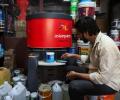
Asian Paints reported a good performance for the second quarter (July-September) of 2025-26 (Q2FY26), with some help from base effects, despite strong competition and extended monsoon. Volume grew in low double digits in the key domestic decorative paints, and value in that segment grew by 6 per cent. Ebitda (earnings before interest, taxes, depreciation, and amortisation) grew 21 per cent year-on-year (Y-o-Y), and PAT (profit after tax) grew 14 per cent. Asian Paints also defended market share better after several quarters where it had lost ground to Birla Opus.

India will look to address several lingering selection puzzles when they take on South Africa in Ranchi on Sunday in the first ODI of the three-match series, where Rohit Sharma and Virat Kohli return to the set-up for a short audition that could well shape their 2027 World Cup fate.

Info Edge (India) topped expectations in its October-December quarter (Q3) results, posting strong revenue and profit growth. Its shares have rallied as much as 6.14 per cent in two days. The technology holding company's revenue rose 15.2 per cent year-on-year (Y-o-Y) to Rs 722.3 crore, driven by robust performance across its key verticals, particularly its recruitment business.

'An asset must generate income. Equities yield dividends, bonds pay coupons, deposits give interest, and real estate earns rent.' 'Gold, silver, and even Bitcoin produce no income, they merely store value. So, they should not be compared to productive assets.'

'...aggressive pricing amid volatility, but these are exceptions.'
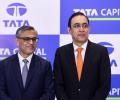
Tata Capital Ltd, set to launch its IPO next week, has identified green financing and digital innovation as its core growth pillars, backed by the merger of its IFC-backed subsidiary Tata Cleantech Capital in 2024. By FY25, the cleantech and infrastructure finance book reached Rs 18,000 crore, growing at a 31.8 per cent CAGR over the last two years, the NBFC said on Friday.

'They are a poor fit for anyone with near-term goals, low volatility tolerance, or a need for steady income or liquidity.' 'First-time investors should typically avoid them.'
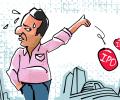
'The primary market's rhythm mirrors investor confidence. While sentiment may appear cautious, it reflects maturity, not weakness.'

From Rs 73k to over Rs 1.2L between January-December 2025 -- is buying gold in 2026 still sensible?

India's mergers and acquisitions (M&A) activity cooled in the second quarter of 2025-26 (Q2FY26), with deal value falling to $26.26 billion from $29.04 billion a year ago, according to Bloomberg data.

Expansion of its development portfolio, brokerage upgrades, and strong outlook have led to a 15 per cent gain for the stock of real estate major Godrej Properties (GPL) in six trading sessions. The company recently acquired a 53-acre land parcel in Joka, Kolkata with an estimated development potential of 1.3 million square feet of saleable area with an estimated revenue potential of Rs 500 crore.

India's corporate bond market, driven by public sector undertaking (PSU) banks and financial institutions last year, is losing momentum since the second quarter of FY26.

There is positive sentiment for Tata Steel on the basis of strong domestic demand, a turnaround of European operations and moderate valuations. A combination of capacity expansion, efficiency gains, higher asset utilisation, and improved operating leverage may lead to margin expansions.

The 15th India-Vietnam Defence Dialogue signalled a move from routine talks to deeper cooperation, with new deals on submarine rescue and defence industry to support stability in the Indo-Pacific, notes Dr Rajaram Panda.

A quiet but consequential power struggle has erupted within the storied 156-year-old Tata Trusts just a year after the death of group patriarch Ratan Tata on October 9, 2024.

India has the best hiring outlook globally, second only to Brazil, with 54 per cent of companies surveyed planning to hire in the December quarter as against 51 per cent in the September quarter, according to a report by global staffing firm ManpowerGroup. The report titled "ManpowerGroup Employment Outlook Survey" showed that India has the strongest net employment outlook for the December quarter in the Asia-Pacific region, followed by China (46 per cent), and Australia (38 per cent). The global net employment outlook in the December quarter would stand at 30 per cent, down by three percentage points from the June-September quarter, yet six percentage points higher than the same period last year, the staffing firm said.

Part-I of this three-part series dives into Delhi-NCR's SPR, Sohna, Dwarka Expressway, and Jewar Airport leading the charge.

From its recent lows, the stock of consumer major Marico is up 7 per cent on the back of a better-than-expected June quarter performance and robust outlook. In a pre-quarter update, the management indicated that domestic volume growth should witness an improvement in FY25, while other segments (growth portfolio, international business) too would see traction going ahead. The near-term trigger is strong sales and operating performance for Q1FY25.

The stock of online classified major Info Edge (India) was up over 6 per cent on Friday on expectations of demand improvement for Indian IT companies. Strong revenue growth prospects for each of its online verticals - including recruitment, matrimony, real estate, education, and upside from its holdings in companies such as Zomato - had prompted Goldman Sachs to upgrade the stock. Info Edge's standalone revenue grew 10.6 per cent year on year (Y-o-Y) in Q2FY25, beating consensus. 99acres (+16.9 per cent Y-o-Y) and Jeevansathi (+33 per cent Y-o-Y) were drivers of growth while recruitment grew 8.5 per cent Y-o-Y.

New investors should not allow themselves to fall prey to FOMO and rush headlong into gold.

'I will not be surprised if there is a 7 per cent handle in front of the decimal place for the full financial year.'

The share of foreign loans in total Adani group debt portfolio dropped to 61 per cent by September 2023 from 63 per cent as of March 2023, as the group repaid part of its foreign loans and refinanced part of older loans. The share of Indian lenders, on the other hand, rose to 39 per cent in the total debt pie in September 2023 from 37 per cent in March after a report by US-based short seller Hindenburg Research in January last year, which led to volatility in the share prices of group companies. The group's total debt remained static at Rs 2.26 trillion in the same period.

Coal India's (CIL's) revenue for the first quarter of 2024-25 (Q1FY25) came in at Rs 36,500 crore, up 1 per cent year-on-year (Y-o-Y) and down 3 per cent sequentially, which was in line with consensus. The blended average selling price was Rs 1,687/tonne, down 5 per cent Y-o-Y and down 1 per cent Q-o-Q, which was below estimates. The adjusted operating profit (excluding overburden removal or OBR costs) stood at Rs 11,500 crore up 3 per cent Y-o-Y and up 17 per cent Q-o-Q, which beat the street. This was due to lower operating expenses.

Equity markets this week would keenly track the upcoming GST Council meeting, macroeconomic data announcements and trading activity of foreign investors for further movement, analysts said. Moreover, developments related to tariff negotiations, global market trends and auto sales data would also drive investors' sentiment.

Not many teams have a "purpose" like West Indies in Test cricket, Gambhir to Caribbeans

The rising tide of Indian nationalism meant that the people of princely states now were keen to become a part of a united and integrated India rather than remain subjects of a princely state. The Congress too supported the people's wish and it fell upon Patel to get the princes to agree. He did so magnificently, using every trick available, whether it was sweet talk or coercion; the rulers buckled and Patel earned the eternal gratitude of the entire nation.

'Crude oil prices are around $66-67 per barrel now but could fall to $55-60 if global disturbances ease.'

The filing of offer documents with the capital markets regulator - Securities and Exchange Board of India - has more than halved this financial year (2022-23, or FY23) as the outlook for new share sales has worsened, following correction in the secondary market. So far in FY23, 66 companies filed their draft red herring prospectus (DRHP), as opposed to 144 in the preceding financial year (2021-22, or FY22).

Genset manufacturer Cummins India has seen its share price rise by 45 per cent in the past three months. The management has reaffirmed that growth would be in double digits over the coming two fiscal years. Growth is expected to be driven by a pickup in domestic infrastructure spending.

To mark its 20th anniversary celebrations the Outlook magazine will soon launch India's first social media awards.
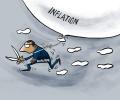
The government is "extremely disappointed" with the latest report of the Moody's rating agency on India's economic outlook. The report, a senior government official said, was highly contradictory and called the rating agency's credibility into question. Referring to the Moody's statement that "India's fiscal strength remains a key weakness in the sovereign credit profile...", the official remarked: "How can my strength be my weakness? Moreover, they are unwilling to have a like-to-like comparison with India."

'They are positioned as defensive products and can potentially give marginally higher returns than liquid funds.'

Marico may buck the industry trend with the fast-moving consumer goods (FMCG) major reporting strong growth and favourable commentary in a weak quarter for the industry. The company reported consolidated revenue growth of 8 per cent year-on-year (Y-o-Y) in Q2FY25. Domestic revenue growth was 8 per cent Y-o-Y with 5 per cent volume growth (4 per cent in Q1FY25).
HDFC Bank's January-March quarter result, which came in-line with expectations, failed to enthuse investors. The reason? The management's decision to abstain from providing any specific growth guidance, and analysts' expectations of an arduous road to recovery. Analysts believe the path to normalisation of several growth metrics is unlikely to be a straightforward one, and the road to balance sheet realignment may be long.

Novelis' Q3FY25 volume stood at 904,000 tonnes (down 1 per cent Y-o-Y, down 4 per cent Q-o-Q), due to lower VAP and automotive shipments. Revenue stood at $4.1 billion (+4 per cent Y-o-Y, down 5 per cent Q-o-Q).

'If nominal growth improves and earnings pick up, Indian stock markets could see a rally next year.'

India's largest life insurer, Life Insurance Corporation of India (LIC) reported encouraging performance in the January-March quarter (Q4) of FY24. Total annual premium equivalent (APE) was at Rs 21,180 crore, up 10.7 per cent year-on-year (Y-o-Y), with group APE of Rs 3,890 crore, up 60 per cent Y-o-Y, though individual APE contracted 2.1 per cent Y-o-Y. The participatory book contracted 20.2 per cent Y-o-Y, but the non-par grew by 206 per cent to Rs 3,740 crore.

Investors should be mindful of the high volatility in cryptos: Bitcoin has fallen more than 80 per cent in past corrections.
